early in the story
The Bucket Family's Poverty
[Charlie Bucket](entity:character-recall-character-charlie-bucket-d2b5c14cafda) lives with his parents and four grandparents in a cramped two-room house, where the old people share the only bed and the others sleep on floor mattresses. [Mr Bucket](entity:character-recall-character-mr-bucket-cc04135c4df2) is the family's sole wage earner, but his poorly paid toothpaste-factory work cannot provide enough food or warmth.
during Charlie’s childhood
Charlie’s Chocolate Longing
Because the family can afford chocolate only once a year, [Charlie Bucket](entity:character-recall-character-charlie-bucket-d2b5c14cafda) treats his birthday bar as a treasure, taking tiny bites over many weeks. His hunger makes the chocolate factory nearby both a source of wonder and a daily torment.
before the Golden Ticket contest
Wonka’s Factory Mystery
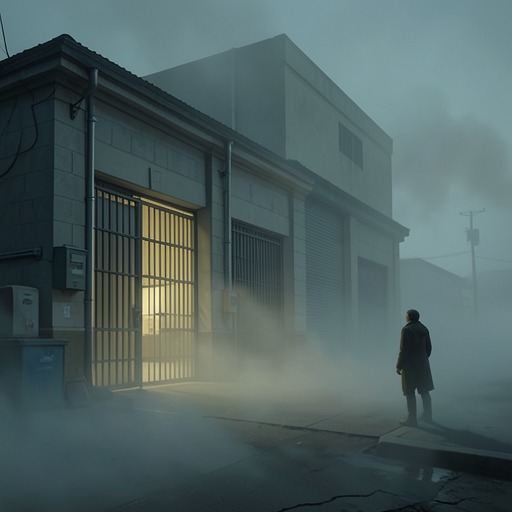
[Wonka's Chocolate Factory](entity:location-recall-location-wonka-s-chocolate-fa-4c35171c5414) stands beside Charlie's home, emitting marvelous smells and strange mechanical sounds, yet no ordinary workers are ever seen entering or leaving. The secrecy transforms the factory into a local legend and deepens Charlie's desire to discover its hidden workings.
before the contest
Wonka’s Inventions Revealed
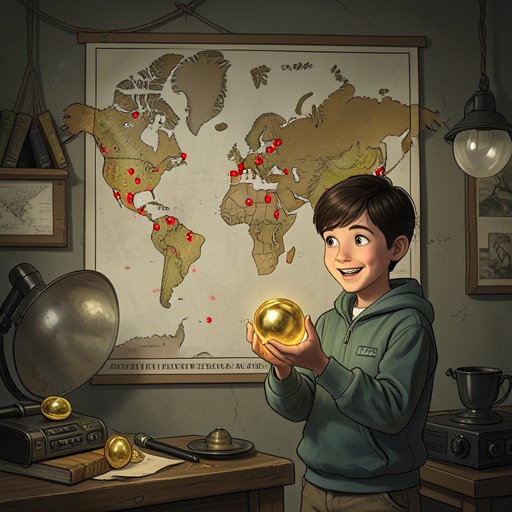
[Grandpa Joe](entity:character-recall-character-grandpa-joe-f45ab8257a62) tells [Charlie Bucket](entity:character-recall-character-charlie-bucket-d2b5c14cafda) that [Willy Wonka](entity:character-recall-character-willy-wonka-1e5e77e5e611) is the world's greatest chocolate maker, capable of inventing sweets that defy ordinary logic. His examples—unchanging ice cream, everlasting gum, color-changing caramels, and fantastical sugary confections—establish the factory as a realm where imagination overrules nature.
in Grandpa Joe’s story
The Chocolate Palace Disaster
[Grandpa Joe](entity:character-recall-character-grandpa-joe-f45ab8257a62) recounts how [Prince Pondicherry](entity:character-recall-character-prince-pondicherry-b15ee3b9bec8) commissioned [Willy Wonka](entity:character-recall-character-willy-wonka-1e5e77e5e611) to build an enormous palace entirely from chocolate. The prince refuses to eat it, and the palace melts under the hot sun, proving both Wonka's inventive genius and the danger of treating his creations as ordinary objects.
before the contest
The Secret Workers Explained
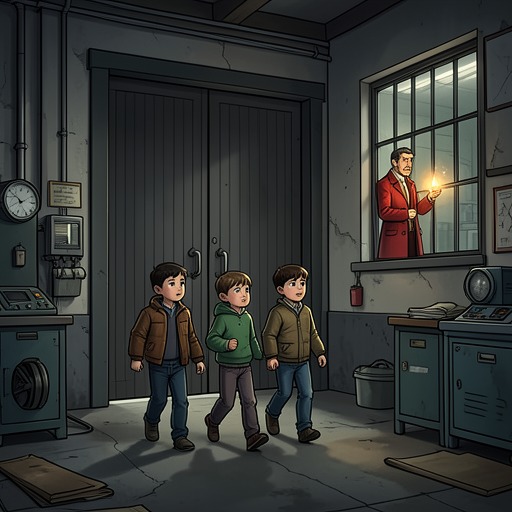
[Willy Wonka](entity:character-recall-character-willy-wonka-1e5e77e5e611) once dismissed every worker after rival chocolate makers sent spies to steal his recipes. When the factory later resumed production behind locked gates, townspeople saw only mysterious small shadows, leading to the revelation that the factory was secretly staffed by tiny beings.
before winter
The Golden Ticket Contest
[Willy Wonka](entity:character-recall-character-willy-wonka-1e5e77e5e611) announces that five children who find [Golden Tickets](entity:concept-recall-concept-golden-tickets-67be7cbf0f93) hidden in ordinary chocolate bars may tour [Wonka's Chocolate Factory](entity:location-recall-location-wonka-s-chocolate-fa-4c35171c5414) and receive lifetime supplies of sweets. The contest turns a private factory mystery into a worldwide spectacle and creates the story's central test of character.
the day after the contest begins
Augustus Finds a Ticket
[Augustus Gloop](entity:character-recall-character-augustus-gloop-bcfaeb2242c4) becomes the first ticket holder because his family buys chocolate constantly to satisfy his appetite. His mother proudly treats his gluttony as harmless nourishment, revealing that the contest will expose the children's faults rather than merely reward luck.
shortly before Charlie’s birthday
Veruca Finds a Ticket
[Veruca Salt](entity:character-recall-character-veruca-salt-63ea68531441) obtains the second ticket after her father orders hundreds of workers to unwrap vast quantities of chocolate bars for her. The exploit displays the family's wealth and the girl's spoiled entitlement, while making clear that parental indulgence is one of the novel's chief moral targets.
after the first two tickets are found
The Worldwide Chocolate Hunt
The remaining tickets provoke frantic buying across the world, including criminal schemes, smashed savings banks, fake claims, and a failed ticket-detecting machine. The hunt becomes a mass obsession, contrasting the wealthy children's unlimited access with [Charlie Bucket](entity:character-recall-character-charlie-bucket-d2b5c14cafda)'s inability to buy more than one bar a year.
the day before Charlie’s birthday
Violet and Mike Find Tickets
[Violet Beauregarde](entity:character-recall-character-violet-beauregarde-789d96775cc9) finds the third ticket while maintaining her compulsive gum-chewing identity, and [Mike Teavee](entity:character-recall-character-mike-teavee-84377bdcd441) finds the fourth while refusing to stop watching violent television. Their victories complete the roster of flawed competitors and leave Charlie with almost no apparent chance.
Charlie Bucket's birthday
Charlie’s Birthday Bar
On his birthday, [Charlie Bucket](entity:character-recall-character-charlie-bucket-d2b5c14cafda) opens his single Wonka bar before the entire family, but no Golden Ticket appears. He responds to the disappointment with generosity, offering to share the chocolate, while the family tries to preserve his dignity and hope.
the day after Charlie’s birthday
Grandpa Joe’s Gamble
[Grandpa Joe](entity:character-recall-character-grandpa-joe-f45ab8257a62) secretly spends his saved sixpence on another Wonka bar and opens it with [Charlie Bucket](entity:character-recall-character-charlie-bucket-d2b5c14cafda) in a final attempt to find the last ticket. The bar contains only chocolate, but their nervous laughter preserves their affection and briefly turns poverty into shared play.
the following two weeks
Winter Starvation
Snow and freezing winds make the Bucket family's already harsh life nearly unbearable. When the toothpaste factory closes, [Mr Bucket](entity:character-recall-character-mr-bucket-cc04135c4df2) loses his job and can earn only a few pennies shoveling snow, leaving the household increasingly hungry and cold.
near the end of winter
Charlie Finds Money
Walking home through the snow, [Charlie Bucket](entity:character-recall-character-charlie-bucket-d2b5c14cafda) finds a fifty-pence piece buried in the gutter. Hunger first drives him toward food, but he plans to save most of the money for his mother, showing the self-restraint and family loyalty that distinguish him from the other children.
the same afternoon
The Fifth Golden Ticket
[Charlie Bucket](entity:character-recall-character-charlie-bucket-d2b5c14cafda) buys a [Whipple-Scrumptious Fudgemallow Delight](entity:object-recall-object-whipple-scrumptious-fu-e75ecf697aa5), eats it ravenously, and then spends part of his change on a second bar. A brilliant flash of gold appears beneath the wrapper: he has found the fifth and final Golden Ticket.
immediately after Charlie finds the ticket
The Ticket Crowd
The shopkeeper announces [Charlie Bucket](entity:character-recall-character-charlie-bucket-d2b5c14cafda)'s discovery, and a crowd gathers to stare, envy him, and offer money for the ticket. The shopkeeper protects Charlie and urges him to take it straight home, turning the accidental find into an act of courage under public pressure.
the evening before the factory visit
Grandpa Joe’s Revival
[Charlie Bucket](entity:character-recall-character-charlie-bucket-d2b5c14cafda) brings the ticket home and the family initially believes he is joking. [Grandpa Joe](entity:character-recall-character-grandpa-joe-f45ab8257a62) recognizes it as genuine, leaps from the bed for the first time in decades, and celebrates wildly, while the promised invitation confirms that the next day will change Charlie's life.
the last day of January
The February Invitation
[Mr Bucket](entity:character-recall-character-mr-bucket-cc04135c4df2) reads the Golden Ticket's instructions aloud: the five children must arrive at [Wonka's Chocolate Factory](entity:location-recall-location-wonka-s-chocolate-fa-4c35171c5414) at ten o'clock on [1 February](entity:time-recall-time-1-february-3c5d7f39c642) and may bring family members. [Grandpa Joe](entity:character-recall-character-grandpa-joe-f45ab8257a62) is chosen to accompany [Charlie Bucket](entity:character-recall-character-charlie-bucket-d2b5c14cafda), and the household prepares amid reporters' chaos.
1 February at ten o'clock
The Factory Gates Open
Crowds gather outside [Wonka's Chocolate Factory](entity:location-recall-location-wonka-s-chocolate-fa-4c35171c5414) as the five children arrive with their families. The locked gates open at ten, and [Willy Wonka](entity:character-recall-character-willy-wonka-1e5e77e5e611) appears in flamboyant clothes to welcome the children and personally begin the tour.
early on 1 February
The Underground Corridors
[Willy Wonka](entity:character-recall-character-willy-wonka-1e5e77e5e611) leads the visitors through a maze of sloping corridors into the underground heart of [Wonka's Chocolate Factory](entity:location-recall-location-wonka-s-chocolate-fa-4c35171c5414). He insists that the most important rooms lie below ground because their immense scale could not be contained in an ordinary building.
during the factory tour
The Chocolate Room
The visitors enter the [Chocolate Room](entity:location-recall-location-chocolate-room-1b07d49c8bb7) and see green meadows, edible vegetation, a waterfall, and the [Chocolate River](entity:location-recall-location-chocolate-river-755102529d2e). [Willy Wonka](entity:character-recall-character-willy-wonka-1e5e77e5e611) explains that the waterfall mixes the chocolate and that even the grass and buttercups are edible, making the room a complete edible landscape rather than a mere production facility.
during the Chocolate Room visit
The Oompa-Loompas Revealed
The children discover tiny people working across the [Chocolate River](entity:location-recall-location-chocolate-river-755102529d2e). [Willy Wonka](entity:character-recall-character-willy-wonka-1e5e77e5e611) identifies them as [Oompa-Loompas](entity:character-recall-character-oompa-loompas-b2388d200337) imported from [Loompaland](entity:location-recall-location-loompaland-84356b4f29b1), where they once endured dangerous jungles and desperately craved cacao beans.
before Augustus’s accident
The Oompa-Loompa Bargain
[Willy Wonka](entity:character-recall-character-willy-wonka-1e5e77e5e611) explains that he rescued the [Oompa-Loompa tribe](entity:organization-recall-organization-oompa-loompa-tri-87d77f6be25c) from a diet of revolting caterpillars by offering them unlimited cacao beans and chocolate in exchange for factory work. Their presence resolves the factory's long mystery while also introducing a workforce governed by Wonka's eccentric bargains.
shortly after entering the Chocolate Room
Augustus Drinks the River
[Augustus Gloop](entity:character-recall-character-augustus-gloop-bcfaeb2242c4) ignores repeated warnings and kneels beside the [Chocolate River](entity:location-recall-location-chocolate-river-755102529d2e) to scoop up hot melted chocolate. His gluttony carries him too far, and he falls into the river while his parents and the other visitors watch helplessly.
immediately after his fall
Augustus Enters the Pipe
The [Chocolate River](entity:location-recall-location-chocolate-river-755102529d2e)'s suction pulls [Augustus Gloop](entity:character-recall-character-augustus-gloop-bcfaeb2242c4) into one of the enormous glass pipes. He shoots upward like a torpedo, then blocks the pipe with his body before the pressure forces him onward toward the factory's fudge-processing rooms.
after Augustus is carried away
The Augustus Gloop Song
The [Oompa-Loompas](entity:character-recall-character-oompa-loompas-b2388d200337) sing that [Augustus Gloop](entity:character-recall-character-augustus-gloop-bcfaeb2242c4)'s greed has made him worthless to others and jokingly describe his transformation into fudge. The song turns the accident into a moral spectacle, establishing the recurring pattern by which each child's vice receives a fantastic consequence.
after Augustus’s removal
The Pink Chocolate Boat
[Willy Wonka](entity:character-recall-character-willy-wonka-1e5e77e5e611) summons a pink boat carved from an enormous boiled sweet, rowed by scores of [Oompa-Loompas](entity:character-recall-character-oompa-loompas-b2388d200337). The survivors board it and begin traveling down the [Chocolate River](entity:location-recall-location-chocolate-river-755102529d2e) toward deeper parts of the factory.
during the boat ride
Charlie Receives Chocolate
[Willy Wonka](entity:character-recall-character-willy-wonka-1e5e77e5e611) notices that [Charlie Bucket](entity:character-recall-character-charlie-bucket-d2b5c14cafda) and [Grandpa Joe](entity:character-recall-character-grandpa-joe-f45ab8257a62) look starved and gives each of them a mug of warm river chocolate. The gesture briefly relieves their poverty and hunger, while Wonka's personal attention reinforces Charlie's growing importance among the visitors.
during the boat ride
The Dark Tunnel Song
The boat enters a dark tunnel shaped like a gigantic pipe, and the passengers fear that nobody knows where they are going. [Willy Wonka](entity:character-recall-character-willy-wonka-1e5e77e5e611) answers their panic with the [“There's no earthly way of knowing”](entity:expression-recall-expression-there-s-no-earthly-81a1cd70f1d1) song, turning danger into theatrical excitement.
after the river journey
The Inventing Room
[Willy Wonka](entity:character-recall-character-willy-wonka-1e5e77e5e611) brings the group into the [Inventing Room](entity:location-recall-location-inventing-room-cbd65c4904e6), where secret machines produce experimental sweets. He displays [Everlasting Gobstoppers](entity:concept-recall-concept-everlasting-gobstoppe-f88b6d813b88) and Hair Toffee, warning the visitors not to touch, taste, or interfere with inventions that are not yet safe.
inside the Inventing Room
The Three-Course Gum
[Willy Wonka](entity:character-recall-character-willy-wonka-1e5e77e5e611) unveils the [Three-Course Dinner Chewing Gum](entity:object-recall-object-three-course-dinner-ch-336d3605d888), a single stick intended to taste like tomato soup, roast beef, and blueberry pie. He warns that the invention is unfinished, but [Violet Beauregarde](entity:character-recall-character-violet-beauregarde-789d96775cc9) is fascinated by the gum precisely because it feeds her compulsive chewing habit.
immediately afterward
Violet Chews the Invention
[Violet Beauregarde](entity:character-recall-character-violet-beauregarde-789d96775cc9) seizes the [Three-Course Dinner Chewing Gum](entity:object-recall-object-three-course-dinner-ch-336d3605d888) despite [Willy Wonka](entity:character-recall-character-willy-wonka-1e5e77e5e611)'s warnings. The gum successfully delivers the first two courses, and her parents encourage her, treating the experiment as a triumph rather than recognizing the danger.
minutes later
Violet Becomes a Blueberry
When Violet reaches the blueberry-pie course, her skin and hair turn purple-blue and her body swells into an enormous blueberry. [Willy Wonka](entity:character-recall-character-willy-wonka-1e5e77e5e611) admits that the dessert stage still fails, and [Oompa-Loompas](entity:character-recall-character-oompa-loompas-b2388d200337) roll her away to the Juicing Room for treatment.
after Violet’s transformation
The Violet Beauregarde Song
The [Oompa-Loompas](entity:character-recall-character-oompa-loompas-b2388d200337) sing that compulsive gum chewing is degrading and dangerous, warning that Violet's fate resembles that of an earlier habitual chewer. Their song frames her transformation as the direct consequence of refusing restraint and ignoring expert warnings.
after Violet is removed
The Corridor of Inventions
[Willy Wonka](entity:character-recall-character-willy-wonka-1e5e77e5e611) rushes the remaining party through corridors lined with rooms devoted to edible and impossible products, including lickable wallpaper, hot ice cream, chocolate-milk cows, Fizzy Lifting Drinks, and sweets with contradictory appearances. The rapid procession emphasizes the factory's inexhaustible imagination and Wonka's impatience with ordinary curiosity.
during the corridor tour
Square Sweets Look Around
The group stops at a room containing square sweets painted with faces. [Veruca Salt](entity:character-recall-character-veruca-salt-63ea68531441) argues that they are square rather than round, but when [Willy Wonka](entity:character-recall-character-willy-wonka-1e5e77e5e611) opens the door, every sweet turns its face toward him, proving his deliberately literal claim that they are square sweets that look round.
later during the tour
The Nut Room
In the [Nut Room](entity:location-recall-location-nut-room-d218be1bc168), one hundred trained squirrels shell walnuts and reject the bad ones by tapping them. [Willy Wonka](entity:character-recall-character-willy-wonka-1e5e77e5e611) warns everyone not to enter, but [Veruca Salt](entity:character-recall-character-veruca-salt-63ea68531441) demands one of the animals and treats ownership as something her parents can purchase on command.
immediately afterward
Veruca Enters the Nut Room
[Veruca Salt](entity:character-recall-character-veruca-salt-63ea68531441) ignores [Willy Wonka](entity:character-recall-character-willy-wonka-1e5e77e5e611)'s prohibition and rushes into the [Nut Room](entity:location-recall-location-nut-room-d218be1bc168) to seize a squirrel. The squirrels swarm over her, pin her limbs, test her head as though she were a bad nut, and drag her toward the rubbish chute.
moments later
The Salt Family Falls
The squirrels declare [Veruca Salt](entity:character-recall-character-veruca-salt-63ea68531441) a bad nut and carry her down the rubbish chute. Her parents leap after her, first trying to rescue her and then falling into the chute themselves, making the family's indulgence part of the punishment.
after the Salt family disappears
The Veruca Salt Song
The [Oompa-Loompas](entity:character-recall-character-oompa-loompas-b2388d200337) sing that [Veruca Salt](entity:character-recall-character-veruca-salt-63ea68531441)'s spoiled behavior is rooted in her parents' constant surrender to her demands. The song shifts responsibility from the child alone to the family system that manufactured her entitlement.
after Veruca’s fall
Only Charlie and Mike Remain
With [Augustus Gloop](entity:character-recall-character-augustus-gloop-bcfaeb2242c4), [Violet Beauregarde](entity:character-recall-character-violet-beauregarde-789d96775cc9), and [Veruca Salt](entity:character-recall-character-veruca-salt-63ea68531441) gone, only [Charlie Bucket](entity:character-recall-character-charlie-bucket-d2b5c14cafda) and [Mike Teavee](entity:character-recall-character-mike-teavee-84377bdcd441) remain. [Willy Wonka](entity:character-recall-character-willy-wonka-1e5e77e5e611) treats the disappearances as temporary mishaps and urges the surviving party onward, while Charlie's quiet obedience increasingly contrasts with Mike's impatience.
after the Nut Room incident
The Great Glass Lift
[Willy Wonka](entity:character-recall-character-willy-wonka-1e5e77e5e611) introduces the [Great Glass Lift](entity:object-recall-object-great-glass-lift-9125f0adc3ba), which can travel sideways, diagonally, and to any room in the factory. [Mike Teavee](entity:character-recall-character-mike-teavee-84377bdcd441) chooses the button labeled [Television Chocolate](entity:object-recall-object-television-chocolate-00d5ab77a50f), sending the lift violently through the factory while the passengers struggle to remain standing.
later on 1 February
The Television-Chocolate Room
The group enters the dazzling [Television-Chocolate Room](entity:location-recall-location-television-chocolate-fb7dc7f4647a), where [Oompa-Loompas](entity:character-recall-character-oompa-loompas-b2388d200337) operate a gigantic camera and television screen. [Willy Wonka](entity:character-recall-character-willy-wonka-1e5e77e5e611) explains his plan to transmit a real chocolate bar through television so that viewers can receive sweets directly from the screen.
inside the Television-Chocolate Room
Television Chocolate Demonstrated
[Willy Wonka](entity:character-recall-character-willy-wonka-1e5e77e5e611) sends an enormous bar of chocolate through the television process, and it reappears as a small but edible bar on the screen. [Charlie Bucket](entity:character-recall-character-charlie-bucket-d2b5c14cafda) successfully removes it, proving that Wonka's most dangerous-looking inventions can also be genuinely miraculous.
immediately after the demonstration
Mike Chooses Television
[Mike Teavee](entity:character-recall-character-mike-teavee-84377bdcd441) asks whether people can be sent through television and hears [Willy Wonka](entity:character-recall-character-willy-wonka-1e5e77e5e611) admit that it might be possible, though dangerous. Obsessed with being first, Mike runs toward the camera before anyone can restrain him.
moments later
Mike Is Teleported
[Mike Teavee](entity:character-recall-character-mike-teavee-84377bdcd441) pulls the switch and vanishes in a blinding flash, leaving his parents terrified that he has been scattered into millions of pieces. The demonstration becomes a real experiment, and television addiction propels Mike into the final transformation.
shortly afterward
Mike Returns Tiny
[Mike Teavee](entity:character-recall-character-mike-teavee-84377bdcd441) reappears on the television screen as a figure no more than an inch tall. His parents retrieve him, but [Willy Wonka](entity:character-recall-character-willy-wonka-1e5e77e5e611) cannot restore him immediately and proposes stretching him through a gum-testing machine before rebuilding his size with Supervitamin Chocolate.
after Mike’s removal
The Television Warning Song
The [Oompa-Loompas](entity:character-recall-character-oompa-loompas-b2388d200337) sing that television dulls the mind, kills imagination, and replaces reading with passive staring. Their song makes Mike's reduction a warning against technological consumption without judgment and ends by invoking the possibility that he may never regain his original height.
near the end of the tour
Charlie Is the Last Child
[Willy Wonka](entity:character-recall-character-willy-wonka-1e5e77e5e611) asks how many children remain and is theatrically astonished to learn that only [Charlie Bucket](entity:character-recall-character-charlie-bucket-d2b5c14cafda) is left. He immediately declares that Charlie has won, revealing that the tour has been an extended test whose outcome depended on the children's behavior.
immediately after Charlie wins
The Lift Breaks Through
[Willy Wonka](entity:character-recall-character-willy-wonka-1e5e77e5e611) presses the [Great Glass Lift](entity:object-recall-object-great-glass-lift-9125f0adc3ba)'s forbidden “Up and Out” button. The lift crashes through the factory roof and rises into the sky, demonstrating that the machine is not merely an elevator but an instrument capable of escaping the factory's boundaries.
later on 1 February
The Children Return Home
From above the factory gates, [Charlie Bucket](entity:character-recall-character-charlie-bucket-d2b5c14cafda) sees the other children leaving with their parents and truckloads of lifetime sweets. [Augustus Gloop](entity:character-recall-character-augustus-gloop-bcfaeb2242c4) has been squeezed thin, Violet remains purple, Veruca and her parents are covered in rubbish, and [Mike Teavee](entity:character-recall-character-mike-teavee-84377bdcd441) has been stretched extremely tall and thin.
near the ending
Charlie Wins the Factory
[Willy Wonka](entity:character-recall-character-willy-wonka-1e5e77e5e611) reveals that the Golden Ticket contest was designed to identify a child worthy of inheriting [Wonka's Chocolate Factory](entity:location-recall-location-wonka-s-chocolate-fa-4c35171c5414). Because [Charlie Bucket](entity:character-recall-character-charlie-bucket-d2b5c14cafda) is kind, sensible, and receptive to Wonka's guidance, Wonka gives him the entire factory and asks him to learn its secrets.
immediately after the inheritance revelation
The Bucket Family Is Invited
[Willy Wonka](entity:character-recall-character-willy-wonka-1e5e77e5e611) tells [Charlie Bucket](entity:character-recall-character-charlie-bucket-d2b5c14cafda) that the whole family can move into [Wonka's Chocolate Factory](entity:location-recall-location-wonka-s-chocolate-fa-4c35171c5414) and help run it until Charlie is old enough to take control. Charlie worries that his parents and grandparents will refuse to leave, but Wonka insists that everyone must come.
near the ending
The Lift Fetches the Family
The [Great Glass Lift](entity:object-recall-object-great-glass-lift-9125f0adc3ba) descends over the Bucket home, crashes through the roof, and lands in the grandparents' bedroom amid dust and broken masonry. Despite the family's fear and resistance, [Willy Wonka](entity:character-recall-character-willy-wonka-1e5e77e5e611) and [Grandpa Joe](entity:character-recall-character-grandpa-joe-f45ab8257a62) load the bed, the parents, and the four grandparents into the lift.
the ending
A New Life Begins
The Bucket family leaves its ruined house inside the [Great Glass Lift](entity:object-recall-object-great-glass-lift-9125f0adc3ba) and rises toward [Wonka's Chocolate Factory](entity:location-recall-location-wonka-s-chocolate-fa-4c35171c5414). [Grandma Josephine](entity:character-recall-character-grandma-josephine-bec408e3e620) asks whether food will await them, and [Charlie Bucket](entity:character-recall-character-charlie-bucket-d2b5c14cafda) laughs because he knows that the family's hunger and poverty are finally ending.